 Makeup Partner
 How to Find Your Personal Color at Home (7 Easy Tests)
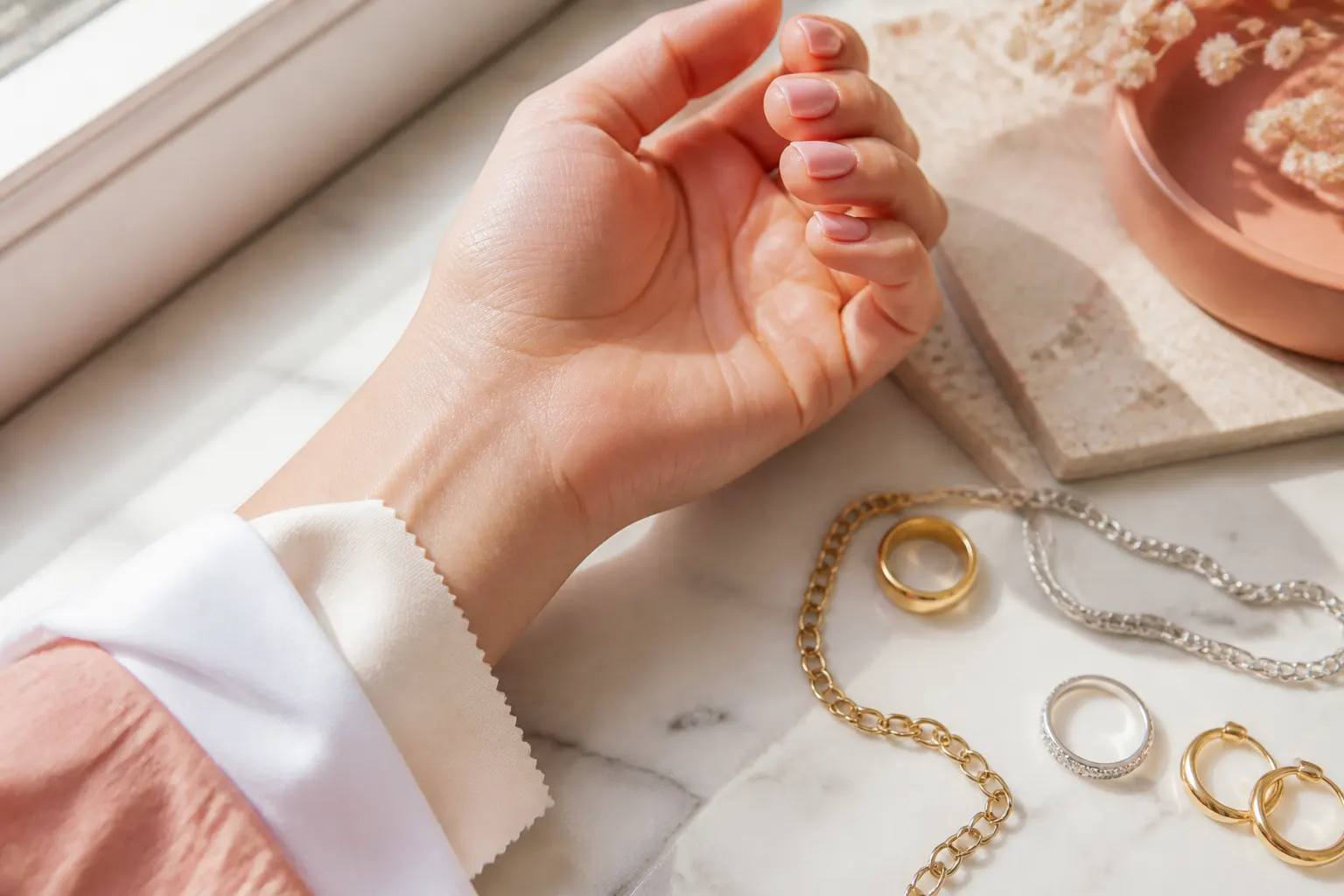
You do not need an expensive studio appointment to get a strong first read on your color season. The tests below use things you already have — a mirror, daylight, and a few items of clothing. Do them near a window in natural light, with no makeup on, and look for agreement across several tests rather than relying on any single one.
1. The vein test
Look at the veins on the inside of your wrist in natural light.
- Greenish veins → likely warm undertone
- Blue or purple veins → likely cool undertone
This is a classic starting point, though hard to read on its own.
2. The jewelry test
Hold a gold item next to your face, then a silver one.
- Gold makes your skin look healthy and lit-up → warm
- Silver makes your skin look fresh and clear → cool
If both look fine, you may be neutral.
3. The white test
Drape a pure white shirt under your chin, then a cream / ivory one.
- Ivory flatters, pure white feels harsh → warm
- Pure white flatters, ivory looks dull → cool
4. The sun reaction test
Think about how your skin reacts to sun.
- Tans easily, rarely burns → often warm
- Burns first, then maybe tans → often cool
5. The eye and hair depth test
Look at the natural depth of your eyes and hair.
- Light brown / soft hair, light eyes → you suit light colors
- Black / dark brown hair, dark eyes → you suit deep colors
This decides the value axis — whether your season is a light one (Spring/Summer) or a deep one (Autumn/Winter).
6. The contrast test
In a mirror, notice the contrast between your hair, skin, and eyes.
- High contrast (dark hair, light skin) → points toward Winter
- Low, blended contrast → points toward Summer or soft Autumn
7. The “best color” test
Recall the compliments you get. Which colors make people say you look great?
- Pastels → Summer
- Vivid, clear colors → Spring or Winter
- Smoky, muted shades → soft Summer or Autumn
- Deep, rich colors → Autumn or Winter
Putting it together
Tally your answers. Mostly warm + light → Spring. Cool + light → Summer. Warm + deep → Autumn. Cool + deep → Winter. If your results are split, you are likely a neutral or soft type — which is exactly where a single home test breaks down.
The Makeup Partner app turns these same signals — undertone, eye and hair depth, jewelry preference, blush and lip color — into a precise AI 16-type diagnosis, then hands you a makeup palette built for your result.
Next steps
Read the deep-dive for your likely season — Spring, Summer, Autumn, or Winter — or start with the fundamentals in what is personal color analysis and warm vs cool undertones.
Download Makeup Partner and get your AI personal color diagnosis.


Frequently asked questions
What is the most reliable at-home test?
No single test is perfect. The jewelry test (gold vs silver) and the white test (ivory vs pure white) tend to be the most telling, but you should look for agreement across several tests rather than trusting just one.
Why do I get mixed results?
Mixed results usually mean you are a neutral or soft type that sits between warm and cool. In that case the value (light vs deep) and chroma (bright vs muted) axes matter more than undertone. An AI diagnosis weighs all of these together.
Does lighting affect the tests?
Yes, a lot. Always test in bright, natural daylight near a window. Indoor bulbs add yellow or blue casts that can flip your result.